Every game master knows the scene. The players decide to chat up the tavern keeper you never planned. Every eye turns to you. And you need a name now.
That is where Thome comes in. It is not about having more names than anywhere else. It is about speed at the table. One click and the name is there, before the silence gets awkward.
What Thome is
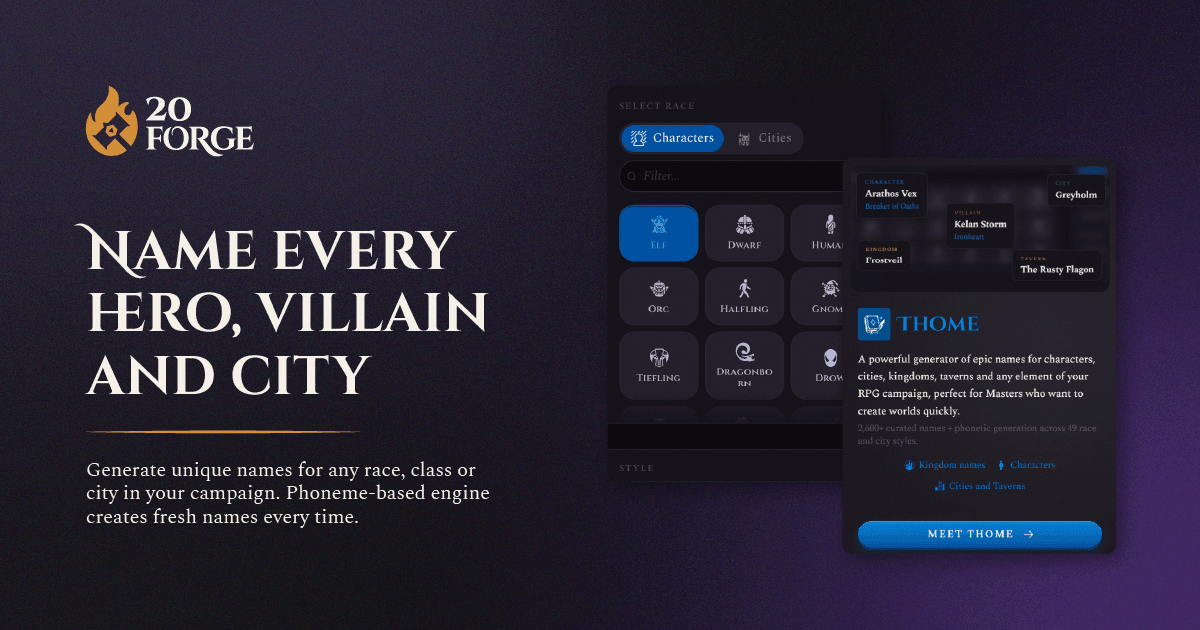
Thome is 20Forge's name generator. Under the hood is a phoneme-based engine with 2,600+ curated names across 49 race and city styles. In practice, that means names that sound right for each people. An elf never comes out looking like a dwarf, a tavern never looks like a kingdom.
Nothing to configure. Open it, pick a type, generate. Ready to copy and use.
Why Thome, and not just ask an AI?
Asking an AI for a name mid-session feels fast, but it isn't. You switch windows, write a prompt, wait for the answer, read it, and often ask again because it came out generic. That's 30 seconds, an eternity at the table, and it pulls you out of the narration.
Thome is one click. No prompt, no waiting, no leaving the mood. AI is a great tool for plenty of things. For pulling a name out of your pocket on the spot, a tool built only for that is faster. It's the difference between the right tool and the generic one.
Character names by race
For NPCs and heroes, use the character name generator. Pick a race (human, elf, dwarf, orc, tiefling, dragonborn, drow and more) and generate as many as you need until one lands. Each race has its own sound, so the name is born with identity.
Tip: generate three at once and pick the one that matches the face of the NPC you imagined. Two seconds, done.
Cities, kingdoms and taverns by style
Worldbuilding needs names too, and lots of them. The city generator gives you cities, kingdoms and taverns by style (medieval, fantasy and others). Perfect for filling the map without stopping to think about every village.
From name to table, without breaking the flow
The trick is not just generating. It is fitting it in without losing momentum. A routine that works:
- Generate the name the moment the NPC shows up.
- Say it out loud right away, as if it always existed.
- Jot it on a quick session list to reuse if the players come back.
When the name comes in a click, you have attention to spare for what matters: the voice, the intent, the scene.
Tips for memorable naming
- Sound before meaning. A name that sounds good sticks better than one full of hidden meaning.
- Contrast helps recall. "Kaelen the Meek" locks in better than just "Kaelen".
- Reuse. The one-line NPC who got a name can become recurring, and recurring names make the world feel alive.
Next time the table catches you off guard, you won't freeze. Pull the name from your pocket and keep the scene going.